Wednesday, July 28, 2010

Tara's Enlightened Activity


Tara's Enlightened Activity: Commentary on The Praises to the Twenty-one Taras
The female Buddhist deity Tara is an object of devotional worship and meditative practice for Tibetan Buddhists everywhere, both male and female. She clears away fears, overpowers negative emotions, and enables all beings to reach enlightenment. She has special resonance as a source of female spiritual wisdom. Tibetans of all schools and traditions recite the verses on which this commentary is based. Focused, contemplative meditation in relation to the myriad aspects of Tara work to transform the practitioner's mind into those enlightened qualities and mind states that Tara represents.
Sought-after teachers throughout the West for over twenty-five years, Khenchen Palden Sherab Rinpoche and his brother Khenpo Tsewang Dongyal Rinpoche illuminate the practice of The Praises to the Twenty-one Taras with humor and wisdom. The explanations cover progressively more subtle levels, from basic Buddhism through the Inner Tantras and culminate with Dzogchen. Interspersed with lively stories about Tara, the authors explain the physical conditions for practice, the outer and inner meanings of the text itself, and give solutions for problems that may emerge as practice progresses.

SharingMatrix

DepositFiles

Nirvana: Concept, Imagery, Narrative


Nirvana: Concept, Imagery, Narrative
The idea of nirvana (Pali nibbāna) is alluring but elusive for non-specialists and specialists alike. Offering his own interpretation of key texts, Steven Collins explains the idea in a new, accessible way - as a concept, as an image (metaphor), and as an element in the process of narrating both linear and cyclical time. Exploring nirvana from literary and philosophical perspectives, he argues that it has a specific role: to provide 'the sense of an ending' in both the systematic and the narrative thought of the Pali imaginaire. Translations from a number of texts, including some dealing with past and future Buddhas, enable the reader to access source material directly. This book will be essential reading for students of Buddhism, but will also have much to teach anyone concerned with Asia and its religions, or indeed anyone with an interest in the ideas of eternal life or timelessness.

SharingMatrix

Tuesday, July 27, 2010

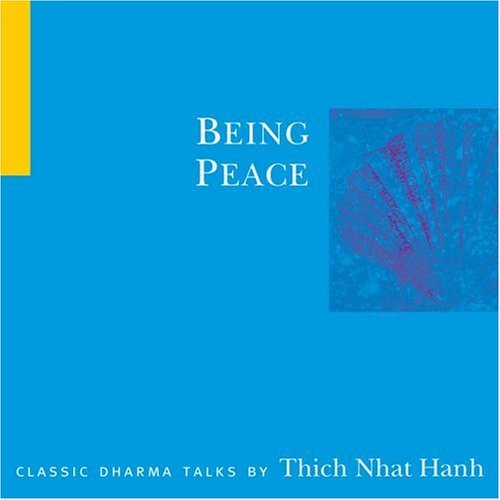
Being Peace


Being Peace - Thich Nhat Hanh
Thich Nhat Hanh delivered the words on this compact disk to an assembly of 700 gathered at Green Gulch Zen Center in Muir Beach, California, on November 3, 1985, and inspired the creation of the best selling book, Being Peace. The teachings contained here provide a crucial antidote to our busy lives, and because of Hanh's experience with the war and his willingness to face the realities of our time, these teachings are also about suffering, reconciliation, and peace.

Hotfile

SharingMatrix

Saturday, July 24, 2010

Buddhism and Dalits


Buddhism and Dalits : Social Philosophy and Traditions
Buddhism is nothing if it is not social. A man from Kapilavastu on the border of Nepal saw the interaction of interests among individuals, associations, kingdoms and general folks with murderous hunt for enthronement, cut-throat competition between kins, rule of might over meek from a corner of Uruvela forest and found the way leading to the end of this misery and professed and propagated his vision of new and fresh dispensation by words of mouth while treading the rugged lands from east to west and n:orth to south on foot for forty five years and breathed his last at the age of eighty years in Kusinagar.

This was Siddhartha Gautama the Buddha whose legacy is transmitted to the world through Buddhist countries and missionaries who cared it more than their own and passed it on to us at present. Buddhism as philosophy appealed to the rational and as art to the artists. In the later half of the 19th century the attention of European scholars was drawn to the study of the Buddha and his religion. The story of Buddhism in India extended to Far East with its ramifications into different schools and sects, its literature, its education, its rulers and writers, during the fifth and seventh centuries A.D., its art, its revival and its present status in the world.

The most compassionate feature of Buddhism was its adoption of Dalits as its own and rendering service to uplift them on par with generality. Dr. Ambedkar, the 14th Dalai Lama, Yen. Thich Nhat Hanh, Sulak Sivaraksha and alike belonged to this social stream of Buddhism. They have always espoused the cause of the most degraded and downtrodden sections of society and set them free from the thraldom of social slavery, economic exploitation, educational backwardness and political subjugation. Out of 14 million Dalits in India none falls above ultra poor or poverty line poor. As such they suffer from poverty including deprivation of food, income and employment and, being socially disadvantaged group Dalits suffer from backwardness in education, discrimination in employment. atrocities and suppression in social, cultural and religious matter. Needless to stress that compared to SCs and STs, let alone OBCs and General Category the Buddhist group in Maharashtra has greatest incidence of poverty. No radical change is possible without Dalit participation in the midst of capitalist privatized corporate market economy neglecting human labour and its contribution for new products and new order of humanity.


Mahamudra: The Moonlight


Mahamudra: The Moonlight -- Quintessence of Mind and Meditation
When Mahamudra first appeared in 1986, it was a landmark in the history of Buddhist publishing in English. It was translated at the behest of the 16th Karmapa, who was asked what text would be most beneficial to Western practitioners. Collecting all of Mahamudra's key texts in one volume, the book is a staple for practitioners of the Kagyu school of Tibetan Buddhism, who appreciate its detailed theoretical and practical explanations. This stunning new edition, printed on fine paper, is as inspiring to behold as it is to read.

Hotfile

SharingMatrix

Wednesday, July 21, 2010

Kindness, Clarity, and Insight


Kindness, Clarity, and Insight: The Fourteenth Dalai Lama, His Holiness Tenzin Gyatso By Dalai Lam
This best-selling book contains teachings for Western audiences during His Holiness' tours of North America. He covers a wide variety of spiritual and human concerns in a practical and direct manner with his characteristic warmth, wit and perception. The teachings move ever deeper: Religious Values and Human Society, The Luminous Nature of the Mind, Altruism and the Six Perfections; Deities; Transforming the Mind Through Meditation; Eight Verses of Training the Mind; Om Mani Padme Hum; The Path to Enlightenment; Tibetan Views on Dying; Self and Selflessness; The Two Truths.

depositfiles

sharingmatrix

uploading

Tuesday, July 20, 2010

Rediscovering the Buddha: The Legends and Their Interpretations


Rediscovering the Buddha: The Legends and Their Interpretations
Hans Penner takes a new look at the classic stories of the life of the Buddha. In the first part of the book, he presents a full account of these stories, drawn from various texts of Theravada Buddhism, the Buddhism of South and Southeast Asia. Penner allots one chapter to each of the major milestones in Buddha's life, with titles such as: Birth and Early Life, Flight from the Palace, Enlightenment and Liberation, Last Watch and Funeral. In the process, he brings to the fore dimensions of the myth that have been largely ignored by western scholarship. In Part II, Penner offers his own original interpretations of the legends. He takes issue with Max Weber's assertion that "Buddhism is an other-worldly ascetic religion," a point of view that remains dominant in the received tradition and in most contemporary studies of Buddhism. His central thesis is that the "householder" is a necessary element in Buddhism and that the giving of gifts, which creates merit and presupposes the doctrine of karma, mediates the relation between the householder and the monk. Penner argues that the omission of the householder - in his view one-half of what constitutes Buddhism as a religion - is fatal for any understanding of Buddha's life or of the Buddhist tradition. This boldly revisionist and deeply learned work will be of interest to a wide range of scholarly and lay readers.

SharingMatrix

DepositFiles

Orthodox Chinese Buddhism


Orthodox Chinese Buddhism: A Contemporary Chan Master's Answers to Common Questions
As a well-known scholar and meditation master—His Holiness the 14th Dalai Lama called him “extremely modest, a true spiritual practitioner of deep and broad learning”—Sheng Yen is uniquely qualified to guide Western seekers into the world of contemporary Chinese Buddhism. Written while the author was secluded in solitary retreat in southern Taiwan, Orthodox Chinese Buddhism provides a wealth of theory and simple, clear guidelines for practicing this increasingly popular form of spirituality. One of the most influential Buddhist books in the Chinese language, the book explores a wide range of subjects, from distinguishing core teachings from outdated cultural norms to bridging the gap between Western and Chinese traditions. In the process, it addresses such questions as “To what extent should Buddhism be Westernized to fit new cultural conditions?” and “Does Westernization necessarily lead to ‘a dumbing down’ of Buddhism?” In addition to the translation of the complete original text, this edition includes new annotations, appendixes, and a glossary designed for the Western reader.

SharingMatrix

DepositFiles

Monday, July 19, 2010

How To Live Without Fear and Worry


How To Live Without Fear and Worry - K. Sri Dhammanada
Ven. Dr. K. Sri Dhammanada Is a household name in the Buddhist world. In more than forty two years as incumbent of the Buddhist Maha Vihara, Malaysia, the Venerable has brought the Buddha Word to countless numbers of devotees who otherwise would have has no access to the sublime message of the Enlightened One

Besides his talks the Venerable has been able to reach an even wider audience through his publications which range from the voluminous "Dhammapada" to little five page pamphlets. He has been able to reached all levels of readers from erudite scholar monks to young school children. His whole approach to the exposition of the Dhamma is governed by his deep concern for giving the ancient teachings a contemporary relevance, to show that the Sublime Message is timeless and has a meaning that cuts across the boundaries of time, space, race, culture and even religious beliefs.

My thanks to Yuttadammo for the link.

Torrent

Youtube

Wednesday, July 14, 2010

Genuine Happiness: Meditation as the Path to Fulfillment


Genuine Happiness: Meditation as the Path to Fulfillment
Wallace, founder of the Santa Barbara Institute for Consciousness Studies, explores key Buddhist meditation-related concepts that aid the "conquest of our inner obscurations" and "present a path to inner fulfillment and human flourishing." He first examines several particular methods—such as "mindfulness of breathing"—for cultivating shamatha, a state of "meditative quiescence" in which people's capacity for attention is refined and stabilized. They can then use these techniques to make a direct, delusion-free investigation of their own bodies, feelings and thoughts. These insights, in turn, help them nurture hearts of compassion and equanimity and, ultimately, realize more advanced teachings such as cultivating bodhichitta (a "spirit of awakening"), dream yoga and a highly developed meditation technique known as dzogchen. Wallace's discussions are usually clear and helpful (on why meditation works: "sustained, continuous effort can actually reconfigure your brain"), and his questions invite readers to see for themselves if his assertions resonate. Moreover, each chapter contains guided meditations to help readers encounter the teachings more directly. Nevertheless, the text can become dense and self-referential, and if readers miss a particular point early on, the effectiveness of later sections may be lessened. The result is a solid—if advanced—examination of some key Buddhist meditation techniques that will appeal to the serious student more than the casual seeker.