Showing posts with label Zen. Show all posts

Monday, August 9, 2010

Aitken Roshi Final Interview

Aitken Roshi Final Interview
This past week American Zen Master Robert Aitken passed away at age 93. Shortly before his passing he gave this final interview. The audio is of poor quality and unedited.

Link

Tuesday, July 27, 2010

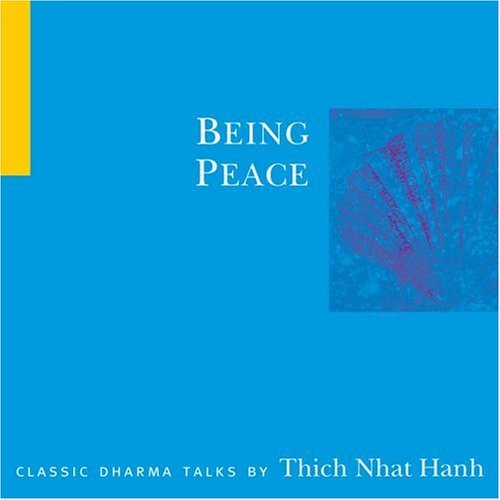
Being Peace


Being Peace - Thich Nhat Hanh
Thich Nhat Hanh delivered the words on this compact disk to an assembly of 700 gathered at Green Gulch Zen Center in Muir Beach, California, on November 3, 1985, and inspired the creation of the best selling book, Being Peace. The teachings contained here provide a crucial antidote to our busy lives, and because of Hanh's experience with the war and his willingness to face the realities of our time, these teachings are also about suffering, reconciliation, and peace.

Hotfile

SharingMatrix

Tuesday, July 20, 2010

Orthodox Chinese Buddhism


Orthodox Chinese Buddhism: A Contemporary Chan Master's Answers to Common Questions
As a well-known scholar and meditation master—His Holiness the 14th Dalai Lama called him “extremely modest, a true spiritual practitioner of deep and broad learning”—Sheng Yen is uniquely qualified to guide Western seekers into the world of contemporary Chinese Buddhism. Written while the author was secluded in solitary retreat in southern Taiwan, Orthodox Chinese Buddhism provides a wealth of theory and simple, clear guidelines for practicing this increasingly popular form of spirituality. One of the most influential Buddhist books in the Chinese language, the book explores a wide range of subjects, from distinguishing core teachings from outdated cultural norms to bridging the gap between Western and Chinese traditions. In the process, it addresses such questions as “To what extent should Buddhism be Westernized to fit new cultural conditions?” and “Does Westernization necessarily lead to ‘a dumbing down’ of Buddhism?” In addition to the translation of the complete original text, this edition includes new annotations, appendixes, and a glossary designed for the Western reader.

SharingMatrix

DepositFiles

Wednesday, June 30, 2010

Advaita Vedanta and Zen Buddhism


Advaita Vedanta and Zen Buddhism: Deconstructive Modes of Spiritual Inquiry
This title explores the relationship between the philosophical underpinnings of Advaita Vedanta, Zen Buddhism and the experiential journey of spiritual practitioners. This fascinating and innovative monograph explores the relationship between the philosophical underpinnings of Advaita Vedanta, Zen Buddhism and the experiential journey of spiritual practitioners. Taking the perspective of the questioning student, the author highlights the experiential deconstructive processes that are ignited when students' 'everyday' dualistic thought structures are challenged by the non-dual nature of these teachings and practices. Although Advaita Vedanta and Zen Buddhism are ontologically different, this unique study shows that in the dynamics of the practice situation they are phenomenologically similar. Distinctive in scope and approach "Advaita Vedanta and Zen Buddhism: Deconstructive Modes of Spiritual Inquiry" examines Advaita and Zen as living practice traditions in which foundational non-dual philosophies are shown 'in action' in contemporary Western practice situations thus linking abstract philosophical tenets to concrete living experience. As such it takes an important step toward bridging the gap between scholarly analysis and the experiential reality of these spiritual practices. "Continuum Studies in Eastern Philosophies" is a new monograph series focusing on research that explores and evaluates the philosophical content and background of Eastern ideas, traditions and practices. Books in the series will seek to develop a critical understanding of the key philosophical and religious ideas of the traditions, challenge Western assumptions about the nature of Eastern thought, and explore and analyse contemporary Western practice of the traditions.

Depositfiles

Megaupload

Wednesday, June 16, 2010

The Zen Impulse and the Psychoanalytic Encounter


The Zen Impulse and the Psychoanalytic Encounter
Although psychoanalysis and Zen Buddhism derive from theoretical and philosophical assumptions worlds apart, both experientially-based traditions share at their heart a desire for the understanding, development, and growth of the human experience. Paul Cooper utilizes detailed clinical vignettes to contextualize the implications of Zen Buddhism in the therapeutic setting to demonstrate how its practices and beliefs inform, relate to, and enhance transformative psychoanalytic practice.

The basic concepts of Zen, such as the identity of the relative and the absolute and the foundational principles of emptiness and dependent-arising, are given special attention as they relate to the psychoanalytic concepts of the unconscious and its processes, transference and countertransference, formulations of self, and more. In addition, through an analysis of apophasis, a unique style of discourse that serves as a basic structure for mystical languages, he provides insight into the structure of the seemingly irrational Zen koan in order to demonstrate its function as a pedagogical and psychological tool.

Though mindful of their differences, Cooper’s intent throughout is to illustrate how the practices of both Zen and psychoanalysis become internalized by the individual who engages in them and can, in turn, inform one another in mutually beneficial ways in an effort to comprehend the ramifications of an individual or collective expanding vision.

SharingMatrix

Megaupload

Monday, May 31, 2010

Taking the Path of Zen


Taking the Path of Zen - Robert Aitken
There is a fine art to presenting complex ideas with simplicity and insight, in a manner that both guides and inspires. In Taking the Path of Zen Robert Aitken presents the practice, lifestyle, rationale, and ideology of Zen Buddhism with remarkable clarity.

The foundation of Zen is the practice of zazen, or mediation, and Aitken Roshi insists that everything flows from the center. He discusses correct breathing, posture, routine, teacher-student relations, and koan study, as well as common problems and milestones encountered in the process. Throughout the book the author returns to zazen, offering further advice and more advanced techniques. The orientation extends to various religious attitudes and includes detailed discussions of the Three Treasures and the Ten Precepts of Zen Buddhism.
Taking the Path of Zen will serve as orientation and guide for anyone who is drawn to the ways of Zen, from the simply curious to the serious Zen student.

Megaupload

Hotfile

Monday, May 17, 2010

Buddhism in America


Buddhism in America: Brilliant visions of the present and future of American Buddhism
What happens when an ancient Asian spiritual tradition takes root in a brash young democracy? Ask the world’s leading Buddhist teachers and thinkers this question, and you have Buddhism in America, Volume I, a historic collection of the most provocative and insightful sessions from the respected Buddhism in America national conferences. Here are the sometimes iconoclastic, always brilliant visions of those who are mapping out the present and future of American Buddhism.

* Sogyal Rinpoche: The Future of Buddhism – “When I came to the West,” recounts this native Tibetan scholar and teacher, “I relearned the Dharma.” Sogyal Rinpoche shares his learned and cross-cultural perspectives on American Buddhism.

* Robert Thurman: Toward American Buddhism – It took Buddhism a thousand years to convince the warlike Tibetans to lay down their arms. How long will it be before America’s army bases are converted into Dharma centers? A penetrating and entertaining session with this esteemed professor and author.

* Joan Halifax: Mindfulness and Compassionate Action – A Zen master surveys the challenges we all understand – consumerism, over-achievement, misdirected sexuality – and shows how to apply the Buddha’s teachings in a culture he never experienced.

* Lama Surya Das: American Karma, One Dharma – Describing American Buddhism as “unorthodox,” Lama Surya Das explores the special importance of the spiritual community sangha in the land of the rugged individual.

* Tsultrim Allione: Relationship and Intimacy As a Path – The author of Women of Wisdom shows how we can take advantage of our obsession with relationships to enter more deeply into the Buddhist practice of compassion.

* Peter Matthiessen: The Coming of Age of American Zen – A Buddhist priest and bestselling author reveals how the austere teachings of Japanese and Korean Zen lend themselves to the American tradition of social activism.

* Stephen Batchelor: Deep Agnosticism – Two dangers face Western Buddhism, warns Stephen Batchelor: applying the Dharma too loosely and adhering too rigidly to its Asian forms. The author of Buddhism beyond Beliefs brings new relevance to the Buddha’s teaching of the “Middle Way.”


Demonoid

Monday, February 22, 2010

Big Mind Workshop BERLIN 2008 - Genpo Roshi


Big Mind Workshop BERLIN 2008 - Genpo Roshi
This DVD presents a highly original and accessible pathway to self-discovery and personal liberation. Since 1999 the Big Mind process has been experienced by many thousands of people in seminars across America. Big Mind employs a Jungian voice dialogue technique that enables people to step out of limited self-concepts into awareness of their many different sub-selves (emotions/mental states). In addition to exploration of the more familiar sub-voices like anger and fear, author Zen Master Dennis Genpo Merzel uses this technique to help people access the ever-present Big Mind/Big Heart awareness - the clear, "just being" awareness and the unconditional compassion that we all can experience. Benefits: Access to our innate wisdom, compassion and equanimity; openness of mind and ability to shift perspectives; greater presence and empowerment; and appreciation for the wisdom within all of our many sub-selves even ones we tend to dislike or disown, like fear and anger.

Hotfile

Download
Download
Download
Download
Download
Download
Download


Megaupload
Mirror
Mirror
Mirror
Mirror
Mirror
Mirror
Mirror

Wednesday, January 27, 2010

Zen Mind, Beginner's Mind


Zen Mind, Beginner's Mind
A respected Zen master in Japan and founder of the San Francisco Zen Center, Shunryu Suzuki has blazed a path in American Buddhism like few others. He is the master who climbs down from the pages of the koan books and answers your questions face to face. If not face to face, you can at least find the answers as recorded in Zen Mind, Beginner's Mind, a transcription of juicy excerpts from his lectures. From diverse topics such as transience of the world, sudden enlightenment, and the nuts and bolts of meditation, Suzuki always returns to the idea of beginner's mind, a recognition that our original nature is our true nature. With beginner's mind, we dedicate ourselves to sincere practice, without the thought of gaining anything special. Day to day life becomes our Zen training, and we discover that "to study Buddhism is to study ourselves." And to know our true selves is to be enlightened.

Hotfile

Filefactory

Thursday, January 21, 2010

Zen and the Art of the Controlled Accident


Zen and the Art of the Controlled Accident - Alan Watts
Alan Watts speaks to the ancient art of living the Zen life. Accompanying himself on the Koto, Watts enriches the program with readings of Zen poetry and stories.

depositfiles
uploading
sharingmatrix
letitbit
megaupload

Sunday, January 17, 2010

Enlightenment in Dispute


Enlightenment in Dispute: The Reinvention of Chan Buddhism in Seventeenth-Century - Jiang Wu
Enlightenment in Dispute is the first comprehensive study of the revival of Chan Buddhism in seventeenth-century China. Focusing on the evolution of a series of controversies about Chan enlightenment, Jiang Wu describes the process by which Chan reemerged as the most prominent Buddhist establishment of the time. He argues that the revival of Chan Buddhism depended upon reinventions of previous Chan ideals, which had been largely lost after the Song dynasty.

Wu investigates the development of Chan Buddhism in the seventeenth century, focusing on controversies involving issues such as correct practice and lines of lineage. In this way, he shows how the Chan revival reshaped Chinese Buddhism in late imperial China. Situating these controversies alongside major events of the fateful Ming-Qing transition, Wu shows how the rise and fall of Chan Buddhism was conditioned by social changes in the seventeenth century.

Examining the role of textual practice and the implication of dharma transmission in rebuilding Chan institutions, Wu argues that the Chan revival was actively coordinated to coincide with the transformation of Chinese culture and society. His study concludes by bringing the Chan revival to a larger historical context and reflecting on its legacies, ultimately establishing a general pattern of past Buddhist revivals.

depositfiles
uploading
sharingmatrix
letitbit
megaupload

Tuesday, January 12, 2010

Crazy Clouds: Zen Radicals, Rebels & Reformers


Crazy Clouds: Zen Radicals, Rebels & Reformers
Crazy Cloud is the pen name assumed by Ikkyu who was a Zen poet, calligrapher and wandering teacher. The name itself is a pun on the Japanese word denoting the Buddhist monk whose detachment from wordly life has him drifting like a cloud over water. The "Crazy Clouds" of this book are those innovative, nonconformist Zen masters, the wandering seekers and sages often disguised as beggars, nomadic preachers and "madmen", whose singular Zen way has profoundly traditional practices of meditation, daily life and spiritual, social and political attitude in Zen Buddhism. Spanning a period from 8th-century China to 20th-century America, the book portrays the lives and teachings of Zen masters like the fierce Rinzai, the easy-going layman P'ang, the renegade Ikkyu, and the lay monk Nyogen Senzaki all of whose interpretations of even the most radical forms of practice proved too enigmatic and avant garde for their contemporaries, but which remain invaluable guidelines for practitioners in today's Western Zen world of feminists, anarchists, ecologists and spiritual activists. The Crazy Clouds invite us to walk with them on the razor's edge of essential freedom and moral responsibility. We must be careful about aping their eccentricity, or taking license for "creative anarchy." Without the experience of their hardwon realization and training, which in every case included a religious institution and a teacher, the mere imitator embarks on a dangerous and potentially immoral enterprise. At the most intimate level, Crazy Cloud Zen illustrates that meditation is a living experience, neither limited to monasteries and temples, nor bounded by time and national borders. It effaces the dour and taciturn image that many people have taken for Zen, emphasizing instead the joy in discovering that "emptiness is form " and " form is emptiness," and it embodies a vision great enough to embrace the Whole.

Depositfiles

Uploading

Sunday, December 13, 2009

Out of Your Mind: Essential Listening From the Alan Watts Audio Archives


Out of Your Mind: Essential Listening From the Alan Watts Audio Archives
In order to come to your senses, Alan Watts often said, you sometimes need to go "out of your mind." Perhaps more than any other teacher in the West, this celebrated author, former Anglican priest, and self-described "spiritual entertainer" was responsible for igniting the passion of countless wisdom seekers to the spiritual and philosophical delights of Asia and India. Now, with Out of Your Mind: Essential Listening from the Alan Watts Audio Archives, you are invited to immerse yourself in twelve of this legendary thinker's pinnacle teaching sessions on how to break through the limits of the rational mind and begin expanding your awareness and appreciation for "the Great Game" unfolding all around us.
Out of Your Mind brings you six complete seminars carefully selected from hundreds of recordings by Alan Watts' son and archivist Mark Watts that capture the true scope of this brilliant teacher in action. On these superb, digitally restored recordings, you will delve into Alan Watts' favorite pathways out of "the trap of conventional awareness."

Uploading 1

Uploading 2

Filefactory 1

Filefactory 2

Sunday, November 15, 2009

Do You Do It or Does It Do You?


Do You Do It or Does It Do You?: How to Let the Universe Meditate You - Alan Watts
At the heart of the popularity of such spiritual teachers as Eckhart Tolle and Ken Wilber lies the spirit and intellectual passion of the seminal teacher who inspired them all—Alan Watts. Now, in response to our run-away bestselling audio collection Out of Your Mind, Sounds True is proud to present one of Alan Watts’ most extraordinary learning sessions. Listeners will delight in hearing Alan Watts at his finest as he guides them with humor, deep insight, and startling wisdom into a genuine understanding of how the grand, exuberant Self plays the game of living through us, and vice versa. With rare guided meditations taught by Watts himself, Do You Do It or Does It Do You? is an essential audio seminar with one of the true pioneers of Western spirituality.

Megaupload

Depositfiles

Uploading

Sunday, November 8, 2009

The Record of Linji


The Record of Linji
The Linji lu (Record of Linji) has been an essential text of Chinese and Japanese Zen Buddhism for nearly a thousand years. A compilation of sermons, statements, and acts attributed to the great Chinese Zen master Linji Yixuan (d. 866), it serves as both an authoritative statement of Zen's basic standpoint and a central source of material for Zen koan practice. Scholars study the text for its importance in understanding both Zen thought and East Asian Mahayana doctrine, while Zen practitioners cherish it for its unusual simplicity, directness, and ability to inspire.
One of the earliest attempts to translate this important work into English was by Sasaki Shigetsu (1882-1945), a pioneer Zen master in the U.S. and the founder of the First Zen Institute of America. At the time of his death, he entrusted the project to his wife, Ruth Fuller Sasaki, who in 1949 moved to Japan and there founded a branch of the First Zen Institute at Daitoku-ji. Mrs. Sasaki, determined to produce a definitive translation, assembled a team of talented young scholars, both Japanese and Western, who in the following years retranslated the text in accordance with modern research on Tang-dynasty colloquial Chinese. As they worked on the translation, they compiled hundreds of detailed notes explaining every technical term, vernacular expression, and literary reference. One of the team, Yanagida Seizan (later Japan's preeminent Zen historian), produced a lengthy introduction that outlined the emergence of Chinese Zen, presented a biography of Linji, and traced the textual development of the Linji lu. The sudden death of Mrs. Sasaki in 1967 brought the nearly completed project to a halt. An abbreviated version of the book was published in 1975, but neither this nor any other English translations that subsequently appeared contain the type of detailed historical, linguistic, and doctrinal annotation that was central to Mrs. Sasaki's plan.

Uploading


Depositfiles

Monday, August 24, 2009

Ango - Rev. Taigu Turlur


Ango - Rev. Taigu Turlur
Rev. Taigu talks about Ango, a special 100 day Practice Period.
This is the text quoted in the following talk. It was given at the beginning of Ango, the summer practice. I strongly recommended the reading of the book itself. Amazing translations and real inspiring collection that give a perfect glimpse of Dogen's genius.

Formal Talk on the First Day of the Practice Period, recorded by Ejo, 1245, Echizen.

(...) On the first day of the summer period he ascended the teaching seat, held up a whisk, drew a circle in the air, and said,"our practice period~peacefully dwelling~goes beyond this".
He drew another circle and said,"Peacefully dwelling is to study this thoroughly. So it is taught that the Buddha who is the King of the Empty Eon received this life vein, becoming a buddha,becoming an ancestor. The fist and the staff embody this point. They transmit Dharma and transmit the robe.
"During each summer practice period, make each moment the top of your head. Don't regard this as a beginning. Don't regard this as going beyond. Even if you see it as a beginning, kick it away. Even if you se it as going beyond, stomp on it. Then you are not bound by beginning or going beyond. How is it?"
Dogen took up the whisk, drew a circle and said: "Dwell peacefully in this nest".

Youtube

Monday, August 17, 2009

The Art of Mindful Living


The Art of Mindful Living - Thich Nhat Hanh
Zen meditation master and Nobel Peace Prize nominee Thich Nhat Hanh offers his practical teachings about how to bring love and mindful awareness into our daily experience. These rare moments were recorded during a family meditation retreat. Kind – purposeful – illuminating – here is an abundant treasure of traditional gathas (teachings) that unify meditation practice with the challenges we face in today’s world. Enhanced features include traditional Vietnamese music performed by the monks and nuns of Plum Village, a meditation practice from Thich Nhat Hanh’s Mindful Movements video, and an interview with the author.

Demonoid

Torrentportal

Wednesday, August 12, 2009

Buddhism: The Religion of No-Religion


Buddhism: The Religion of No-Religion - Alan Watts
In this dynamic series of lectures, Alan Watts takes us on an exploration of Buddhism, from its roots in India to the explosion of interest in Zen and the Tibetan tradition in the West. Watts traces the Indian beginnings of Buddhism, delineates differences between Buddhism and other religions, looks at the radical methods of the Mahayan Buddhist, and reviews the Four Noble Truths and the Eightfold Path.


depositfiles part 1
depositfiles part 2
depositfiles part 3

Friday, July 31, 2009

The Platform Sutra of the Sixth Patriarch


The Platform Sutra of the Sixth Patriarch - John R. McRae
The Platform Sutra records the teachings of Hui-neng, the Sixth Patriarch, who is revered as one of the two great figures in the founding of Ch'an (Zen) Buddhism. This translation is the definitive English version of the eighth-century Ch'an classic. Phillip B. Yampolsky has based his translation on the Tun-huang manuscript, the earliest extant version of the work. A critical edition of the Chinese text is given at the end of the volume. Dr. Yampolsky also furnishes a lengthy and detailed historical introduction which contains much information hitherto unavailable even to scholars, and provides the context essential to an understanding of Hui-neng's work. He gives an account of the history and legends of Ch'an Buddhism, with particular attention to the traditions associated with Hui-neng, quoting or summarizing the most important narratives. He then discusses the various texts of the Platform Sutra, and analyzes its contents.

Link

Zen 24/7: All Zen, All the Time - Philip T. Sudo


Zen 24/7: All Zen, All the Time - Philip T. Sudo
If you're searching for revelation and contentment, look no further than a handshake, a cup of coffee -- even your laundry pile. The most mundane details of life contain zen's profound truths, if you're of the mind to look for them.

By awakening to and embracing the zen in your life, you'll listen, watch, eat, work, laugh, sleep, and breathe your way to truth -- every moment of every day.

Philip Toshio Sudo has found Zen in the unlikeliest of places and has written about them: Zen Guitar, Zen Sex, and Zen Computer. Now, in Zen 24/7, it's Zen everything. But if it's true that being mindful in every moment is the heart of Zen, then everything is Zen. Taking just this approach, Sudo walks readers through a full day, from alarm clock to bedtime, stopping to ruminate on how the most mundane things, from a beer to a meeting to the dry cleaners, can remind us of bits of Zen wisdom. A Zen flag reminds us that it is the mind that moves; Zen fuzzy dice remind us to flow with traffic; a Zen mall reminds us to reduce desires; Zen sleep reminds us that every day's a good day. As in the best Zen writing, Sudo's observations are breezy but packed with genuine insight. There is a bit of sly humor and lots of encouragement, as if each page were a daily affirmation. This is a book to read through once, then pick up often for reminders, especially the page on Zen shopping, which you'll want to post on your refrigerator.

Rapidshare