Monday, October 6, 2008

Shobogenzo The Treasure House of the Eye of the True Teaching - Master Dogen


Shobogenzo The Treasure House of the Eye of the True Teaching - Master Dogen
A new translation of a Zen classic... The Shōbōgenzō is the recognized spiritual masterpiece by the thirteenth century Japanese Sōtō Zen Master Eihei Dōgen. It is comprised of discourses that he gave to his disciples, in person or in writing, at various times between 1231 and his death twenty-two years later at age fifty-three. These discourses cover a wide range of topics pertinent to those in monastic life though often also relevant to those training in lay life. He discusses matters of daily behavior and religious ceremonial as well as issues involving the Master-disciple relationship. He also explores the deeper meaning that informs the so-called Zen kōan stories, which often puzzle readers by their seeming illogicality and contrary nature.

Rapidshare

Sunday, October 5, 2008

The Still Point: Intro to Zen Meditation DVD with John Daido Loori


The Still Point: Intro to Zen Meditation DVD with John Daido Loori
This unique introduction to Zen meditation features specific instruction for and demonstrations of sitting postures and beginning mindfulness exercises. Zen Master Loori takes the meditator on a gently guided exploration of silent sitting, pointing out how we can reclaim our lives by giving our awareness to the moment. Without that awareness, we eat without tasting, love without feeling, die without having fully lived.

No Torrent for DVD just this:
YouTube

Oseam (2003)


Hi Kids! Time for a cartoon! This one has french dubbing but there are English subs.

Oseam (2003)

Based on a fairy tale by by Korean writer Jeong Chae-bong, this is a tale about orphan boy Gilson and his blind sister Gami, who are taken care of by Buddhist monks at a temple. The drama unfolds as Gilson follows a monk up to a mountainside temple to learn more about the soul's eye, so he can teach it to his sister so that she can see the world again with her own eyes.

BTJunkie
Subtitles

Thursday, October 2, 2008

Un Buda (2005)

My thanks to Shan for this Fantastic film! English Subtitles can be found here but play around with the FPS timing.

Un Buda (2005)
It's the story of a young Buddhist who is searching for something beyond this reality, beyond this coexistence system, and he challenges even death itself only for pursuing his goal. A total opposite to his brother, who is a philosopher and very rational, which makes a little difficult the life together between them. After some comings and goings, our main character learns something "beyond" what it is to live intensely and his skeptical brother learns something more about what it is to live intensely.

BTJunkie

Buddha's Dream - Riley Lee

Buddha's Dream - Riley Lee
Like the instrument he plays, the centuries-old shakuhachi flute, Riley Lee has found he has staying power. Lee, an Australian esteemed as a dai shihan (grand master) of the traditional Japanese instrument, found his first audience in the alternative-health community during the 1980s, when cassettes of his unhurried explorations of the shakuhachi's broad expressive palette became popular items. Narada has periodically reissued these evocative works on CD and, considering how the pace of life has intensified since the music's original release dates, the soothing, ancient wind that blows through Lee's shakuhachi seems more welcomed and therapeutic than ever. Buddha's Dream was first released in 1984, and the ethereal expositions found on it--as hokey as this may sound to the unconverted--effectively encourage states of introspection and stillness that are a balm to the body and spirit. Broken into shorter segments than the prolonged improvisations found on such jewels as Sanctuary and Oriental Sunrise, Buddha's Dream at times involves more notes and occasionally conveys a stronger hint of mystery than is found on either of those lovely discs. Still, the same sweetness and gentle spirit radiates in pieces such as "Return of the Fisherman," "Seabreezes," and "As the Water Flows." A splendid choice as an audio backdrop for mediation or massage.
Rapidshare
BTJunkie

Wednesday, October 1, 2008

A Little Monk (2002)


Thanks to my Dharma helper Ossi for this find.

A Little Monk (2002)

A nine-year old monk, Do-nyum, has lived most of his lonely life in a quiet mountain monastery under his elderly master. Though put under a strict regimen of Buddhist teachings, meditation and chores, the child cannot help but to think of his mother, whom he cannot remember but misses dearly and hopes to be reunited with one day. He also wishes that he could be like the other children who live nearby and play games and attend school. Do-nyum's other companion is an older monk named Jung-sim, who is also struggling with staying on the path of enlightenment. The temples groundskeeper keeps reassuring Do-Nyum that his mother will come back someday. But Do-nyum, sick of waiting for a mother who may never return, agrees to be adopted by the monastery's benefactor, a wealthy widow who visits the temple every year to mourn her late son.

Avistaz

Yantra: The Tantric Symbol of Cosmic Unity

Thanks to Rakesh for all these Ebook links!

Yantra: The Tantric Symbol of Cosmic Unity

This book details all kinds of historical Yantras as revealed in various Vedas (historic Hindu scriptures). Yantras are cosmic machines which directs energies to the human body/mind to attain various psychic states. The author dwells deeply in to the philosophy behind it, which in essence is Hinduism. Understanding the Hindu concept of the world, the cosmos and the human being is the key to unlocking the power of Yantra. A reader who is not exposed to Eastern religious philosophies will find it difficult to comprehend the description of concepts behind the Yantra.

4shared

The Seeker's Glossary of Buddhism


The Seeker's Glossary of Buddhism
This is a revised and expanded edition of 'The Seeker's Glossary of Buddhism.' The text is a compendium of excerpts and quotations from some 350 works by monks, nuns, professors, scholars and other laypersons from nine different countries, in their own words or in translation.

How to use the Glossary: This book can be used in threeways: to find the definition of unfamiliar terms; to gain a broader understanding of specific Buddhist concepts; and also as an introduction to Buddhism. In the last instance, we suggest that readers begin with the entry on Parables, then move on to Practice, Obstacles to Cultivation and Ten Non-Seeking Practices. Other entries of a more contemporary interest can be read with benefit by all. These include: Birth Control, Organ Transplants, Vegetarianism, Universe, Immortality.

Rapidshare

Bonpo Dzogchen Teachings - Lopon Tenzin Namdak

Bonpo Dzogchen Teachings - Lopon Tenzin Namdak
Nowadays there are two principal philosophical traditions followed by Tibetan Lamas. The first is found among the Sarmapas, or Newer Schools, which employ the Prasangika Madhyamaka view of Chandrakirti, not only in explicating the real meaning of the Sutra system but also in their interpretation of the Tantras. The second is found among the two Older Schools, the Nyingmapa and the Bonpo, which emphasize the Dzogchen point of view in elucidating their understanding of the Higher Tantras. Among the Older Schools, Dzogchen, the Great Perfection, which lies beyond the process of Tantric transformation, is regarded as the quintessential teaching of the Buddha, pointing directly to the Nature of Mind and its intrinsic awareness, known as Rigpa. However, according to Lopon Tenzin Namdak Yongdzin Rinpoche, the leading Dzogchen master among the Bonpo Lamas living today, It is necessary for us as practitioners to know what Dzogchen is, how to practice it, and the result of this practice. Lopon Rinpoche undertakes this task in a series of nine teachings he gave some years ago to Western students interested in the view of Dzogchen and its practice in meditation. Here the Lopon compares the Dzogchen view with the views of Madhyamaka, Chittamatra, Tantra and Mahamudra, clearly indicating the similarities and the differences among them. Unlike the traditional educational system found in other Tibetan monasteries, at Tashi Menri Monastery and at Triten Norbutse Monastery, both now re-established in India and Nepal respectively, Dzogchen is not restricted to private meditation instruction only. Rather, it is brought out into the daylight of the marketplace of philosophical ideas and discussed in relation to the viewpoints of Sutra and Tantra. The Lopons exceptionally clear exposition of these various views, which have consequences for ones meditation practice, will be of interest to Western students and practitioners.

Rapidshare

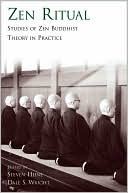
Zen Ritual: Studies of Zen Buddhist Theory in Practice


Zen Ritual: Studies of Zen Buddhist Theory in Practice - Steven Heine
When books about Zen Buddhism began appearing in Western languages just over a half-century ago, there was no interest whatsoever in the role of ritual in Zen. Indeed, what attracted Western readers' interest was the Zen rejection of ritual. The famous 'Beat Zen' writers were delighted by the Zen emphasis on spontaneity as opposed to planned, repetitious action, and wrote inspirationally about the demythologized, anti-ritualized spirit of Zen. Quotes from the great Zen masters supported this understanding of Zen, and led to the fervor that fueled the opening of Zen centers throughout the West.
Once Western practitioners in these centers began to practice Zen seriously, however, they discovered that zazen - Zen meditation - is a ritualized practice supported by centuries-old ritual practices of East Asia. Although initially in tension with the popular anti-ritual image of ancient Zen masters, interest in Zen ritual has increased along with awareness of its fundamental role in the spirit of Zen. Eventually, Zen practitioners would form the idea of no-mind, or the open and awakened state of mind in which ingrained habits of thinking give way to more receptive, direct forms of experience. This notion provides a perspective from which ritual could gain enormous respect as a vehicle to spiritual awakening, and thus this volume seeks to emphasize the significance of ritual in Zen practice.
Containing 9 articles by prominent scholars on a variety of topics, including the Zen rituals kinhin and zazen, this volume covers from the early Chan period to modern Japan. Each chapter deals with key developments in the Linji/Rinzai and Caodon/ Soto schools of China and Japan, describing how Zen rituals mold the lives and characters of its practitioners and shape them in accordance with the ideal of Zen awakening. This volume is a significant step toward placing these practices in a larger historical and analytical perspective.

Rapidshare